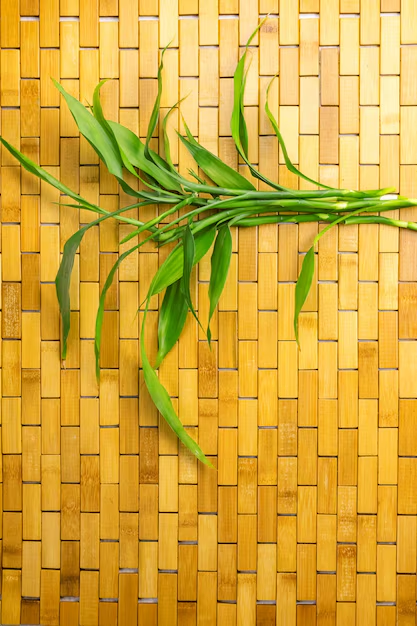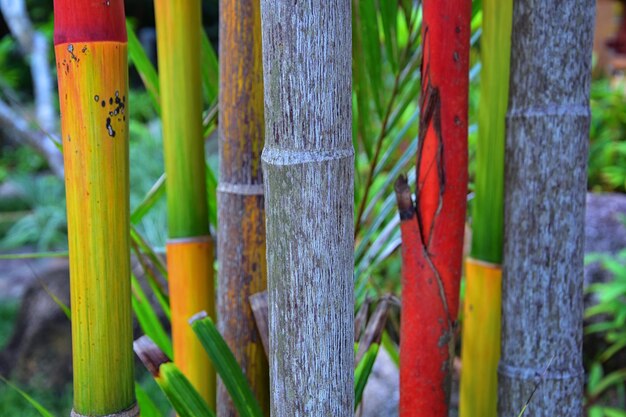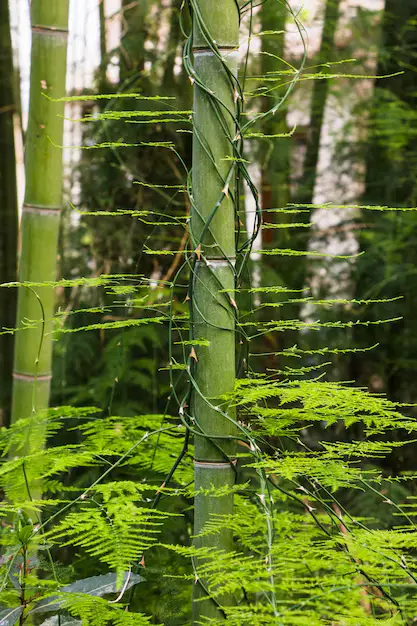
Muli bamboo
(Melocanna baccifera)
India’s most widely used thin-culm bamboo — lightweight, high-tensile, naturally flexible. Sourced directly, bulk-ready, and field-proven across agriculture, construction, and handicraft industries.
3–6 cm
Culm diameter
8–12 m
Mature height
Multi-use
Multi-use

Structural framing & scaffolding
Muli culms are widely used as scaffolding poles and light structural frames for temporary shelters, site scaffolding, and low-cost rural housing. The natural node structure gives rigidity under compression, while the flexibility prevents snapping under lateral wind load.
How to use for framing:
Select culms of 4–6 cm diameter. Lash at crossing points using wire or jute rope. Use longer culms (10–18 ft) as vertical uprights and shorter ones as horizontal stringers.
Scaffolding
Temporary shelter
Rural housing
Crop support stakes
Thin Muli culms (2–3 cm dia, 4–8 ft length) are the most common bamboo stakes used for tomato, capsicum, bean, and flower crop support across Indian farms. Lightweight enough to carry in bulk, strong enough to handle multi-season plant loads.
How to use:
Push pointed end 6–8 inches into soil near plant base. Tie plant stem loosely with soft twine at 2–3 points up the stake. Re-use after washing and drying at season end.
Tomato stakes
Flower support
Bean trellis
Fencing & boundary panels
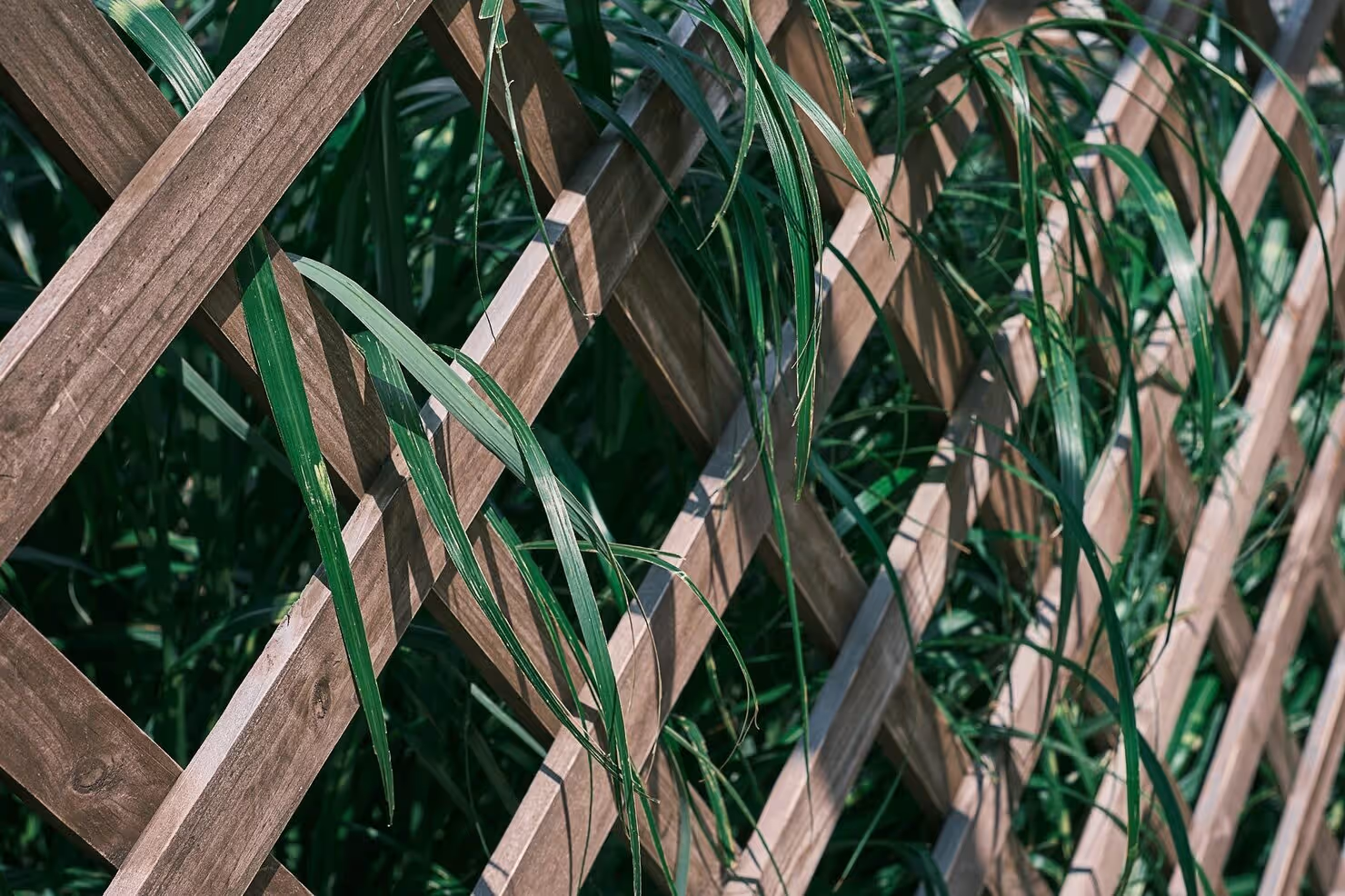
Split Muli culms laid horizontally or woven vertically make strong, low-cost boundary fencing for farms, poultry enclosures, and nurseries. Vertical bamboo fence panels also used as windbreaks in orchard farms.
How to use:
Drive thick-end culms 1.5 ft into ground as posts (3–4 ft apart). Lash thinner Muli poles horizontally at three heights. For woven panels, split culms into strips and interlace alternately.
Farm fencing
Windbreaks
Enclosures
Handicraft & mat weaving
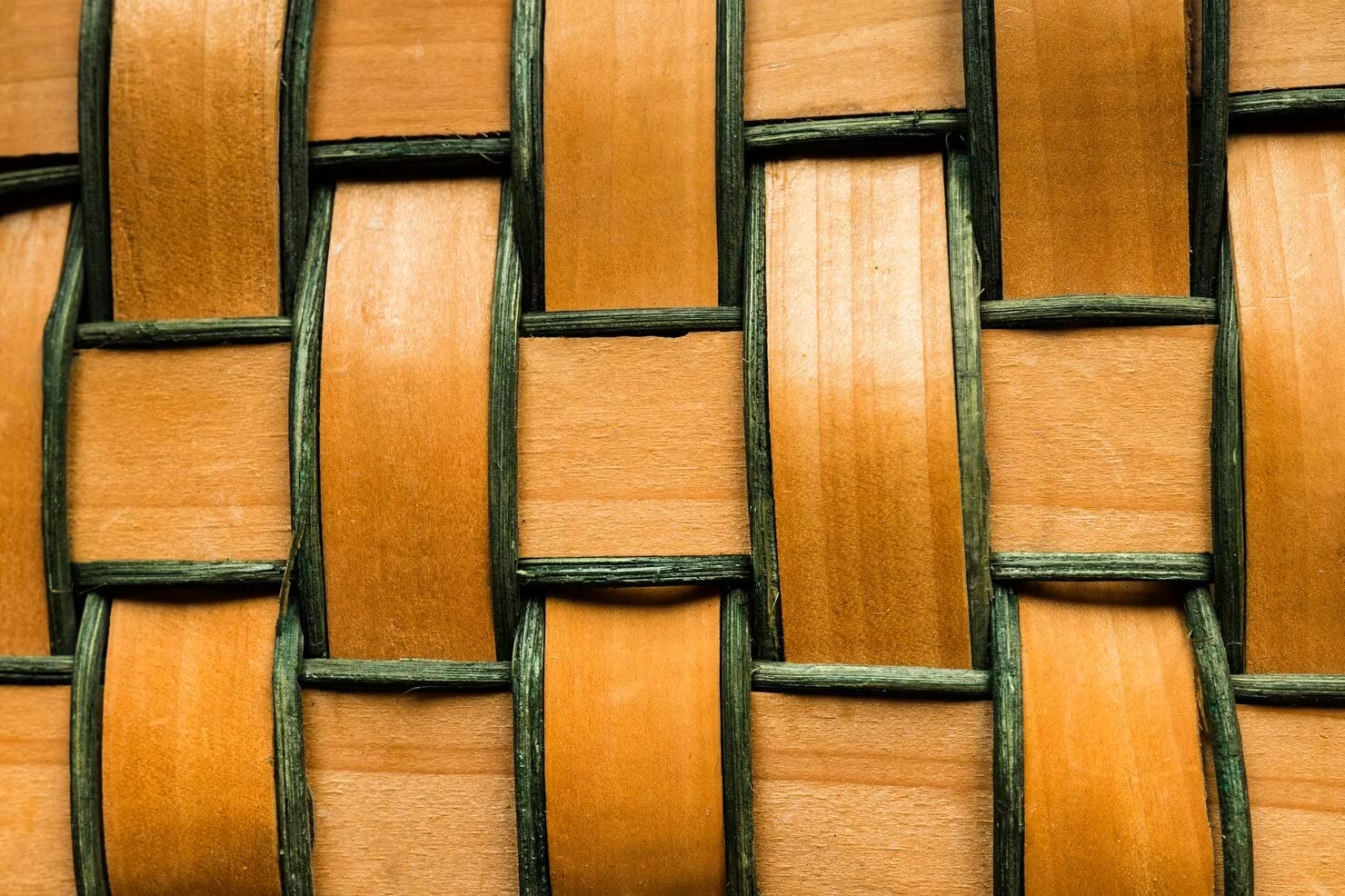
Muli is the primary raw material for Bengali and Northeast Indian bamboo mat industry. The thin walls split easily into even strips for weaving. Widely used for baskets, trays, floor mats (chatai), and decorative panels.
How to use:
Green or semi-dry culms split most cleanly. Use a sharp splitting tool along the node. Strips can be sun-dried and stored for months. Ideal width for mat weaving: 0.8–1.2 cm strips.
Mat weaving
Baskets
Decorative panels
Step-by-step — how to use muli for framing
Select right culms
Pick straight, fully mature culms (3+ years). Look for golden-yellow color, hard outer skin, no cracks. Avoid green or freshly cut — these shrink and warp.
Treatment before use
Soak culms in borax-boric acid sol. (10% conc.) for 48–72 hrs or brush liberally. This prevents borers, fungi, and termites from attacking the frame.
Multi-season reuse
Air-dry treated culms in shade for 2–4 weeks. Do not sun-dry directly — rapid moisture loss causes surface cracking. Store upright or horizontal on racks.
Cut to size
Always cut just above a node — never mid-internode. This keeps the culm end strong. Use a clean crosscut saw for thick culms, a machete for thin stakes.
Lash & assemble
Use galvanized wire, jute rope, or bamboo splints for lashing at joints. Avoid nails — they split the culm. Overlapping joints at least 15 cm for load-bearing frames.
Maintain & reuse
Inspect frames each season. Re-treat damaged culms. Muli frames last 3–5 years with proper treatment and storage away from soil contact and direct rain.
Technical features
Muli Bamboo — Technical Specifications
Commercial grade | Bulk supply | Agriculture & Construction
Swipe left to see more
| Variant | Diameter | Length available | Wall thickness | Best use |
|---|---|---|---|---|
| Thin stake | 1.5 – 2.5 cm | 3 ft 4 ft 6 ft | 2 – 4 mm | Crop support Tying stakes |
| Medium pole | 2.5 – 4 cm | 6 ft 8 ft 10 ft | 4 – 6 mm | Fencing Trellis Light framing |
| Heavy culm | 4 – 6 cm | 10 ft 12 ft 15 ft | 6 – 9 mm | Scaffolding Orchard poles Structural |
| Split strips | 0.8 – 1.5 cm wide | 3 ft 5 ft | 1 – 3 mm | Mat weaving Basket making |